
Harness Size Calculator: Find the Right Fit for Your Dog — First Time, Every Time
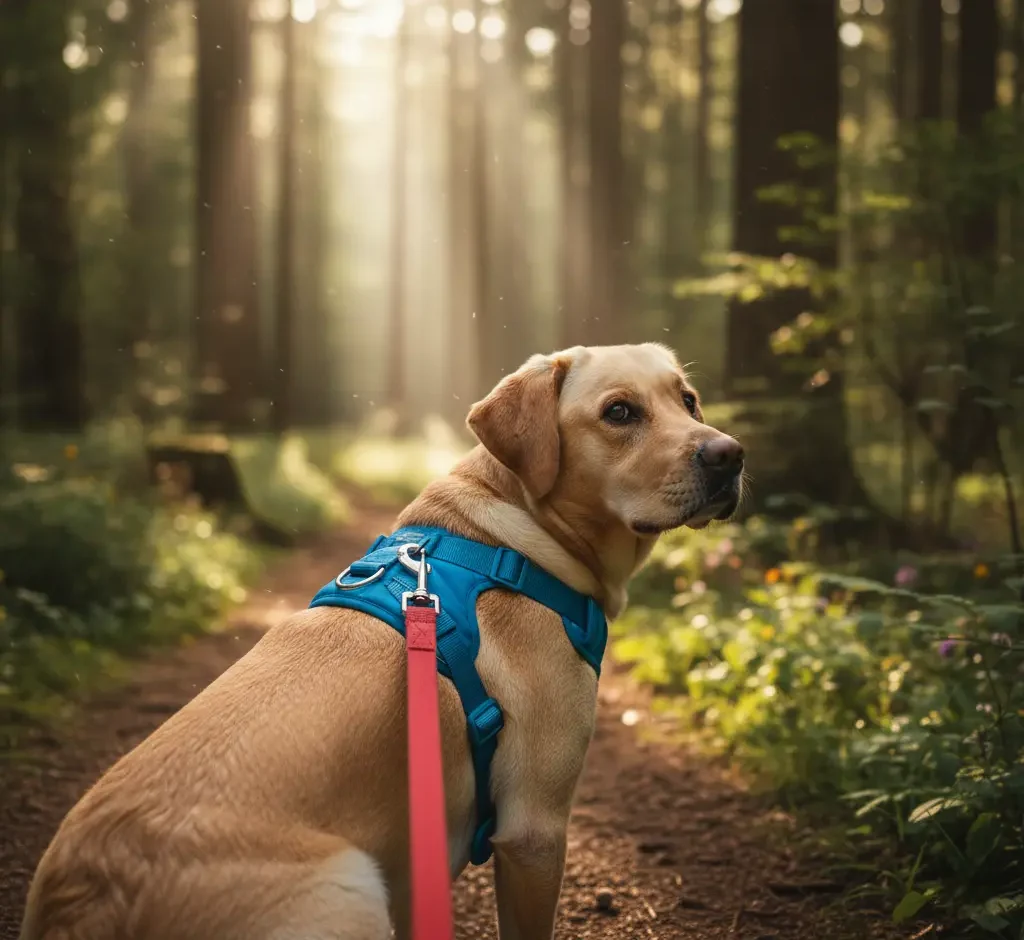
A harness that fits well is one of the most practical things you can give your dog. It makes walks more comfortable for both of you, gives you better control without putting pressure on the neck, and — done right — becomes something your dog barely notices. A harness that fits badly is the opposite: it rubs, restricts, causes pain, or worse, lets your dog slip out at exactly the wrong moment. This calculator takes your dog’s measurements and tells you exactly which size to look for.
What is a Harness Size Calculator?
A harness size calculator estimates the correct harness size for your dog based on their body measurements — primarily chest girth and neck circumference. Unlike collar sizing, where the neck measurement is enough, harness sizing depends heavily on chest girth because the harness wraps around the widest part of the ribcage. Get that measurement right and the rest follows.
The calculator takes your dog’s chest girth, neck size, and optional weight, and maps those measurements against standard harness sizing charts to recommend the correct size — along with the full size table so you can see exactly where your dog falls and how much adjustment room you have.
If you’re also figuring out the right crate for your dog, our Crate Size Calculator works the same way — measurements in, correct size out. Both tools together give you everything you need for comfortable, safe confinement and walks.
How to Measure Your Dog for a Harness
This is the part most people rush, and it’s where most sizing mistakes happen. Two minutes of careful measuring saves you a return trip and a frustrated dog. Here’s how to do it properly:
Step 1 — Chest Girth (the most important measurement)
Stand your dog on a flat surface. Wrap a soft measuring tape around the widest part of the ribcage — this is usually just behind the front legs, where the chest is broadest. Keep the tape parallel to the ground. It should be snug against the fur but not compressing it. Slide two fingers under the tape: if they slide comfortably, the tension is right. If the tape is loose, bring it in; if you can’t fit two fingers, ease it out. This measurement determines your harness size more than anything else.
Step 2 — Neck Circumference
Measure around the base of the neck — where a collar normally sits. This is lower than you might think; it’s not the top of the neck but the point where the neck meets the shoulders. Again, snug but with two fingers of clearance. The neck measurement primarily affects how the harness sits at the top and whether the neck opening will be comfortable.
Step 3 — Weight (optional but helpful)
Weight alone isn’t a reliable sizing guide — a lean Greyhound and a stocky Bulldog can weigh the same but need completely different harness sizes. That said, adding weight gives the calculator a useful cross-reference that helps catch measurement errors. If the weight seems inconsistent with the chest measurement, double-check before ordering.
Step 4 — Measure twice
This sounds obvious but genuinely matters. If you get slightly different results, take the larger of the two measurements. A harness that’s slightly large can be adjusted with the straps; one that’s too small can’t be made to fit no matter how you adjust it.
How to Use the Harness Size Calculator
Enter your dog’s name (optional — it just personalizes the result), select the breed size category, enter the chest girth measurement, and add the neck circumference and weight if you have them. Click the button and the calculator will give you a recommended size, the full adjustment range for that size, and a complete size chart showing where your dog falls relative to all other sizes.
Pay attention to the borderline notes. If your dog’s chest sits right at the edge of two sizes, the calculator will flag it and tell you which way to go. In general, if you’re between sizes, the larger size is safer — straps can tighten, but they can’t extend beyond their maximum.
Harness Size Chart — Quick Reference
Every harness brand has slightly different sizing, but these ranges cover the most common sizing systems:
XS (Extra Small) — Chest 28–40 cm, Neck 20–30 cm, Weight 1–4 kg
Chihuahuas, Yorkshire Terriers, Pomeranians, and other toy breeds. Lightweight vest or step-in designs work best. Check the fit every few weeks — small dogs can change weight quickly.
S (Small) — Chest 40–54 cm, Neck 28–38 cm, Weight 4–9 kg
Shih Tzus, Miniature Poodles, small Beagles. A no-pull harness with a front clip is ideal if your dog pulls — surprisingly common in small breeds that haven’t had leash training.
M (Medium) — Chest 54–70 cm, Neck 36–50 cm, Weight 9–22 kg
Beagles, Cocker Spaniels, Border Collies, Bulldogs. This is the widest size category with the most harness options. Padded chest panels are worth the extra cost for dogs that walk more than 30 minutes a day.
L (Large) — Chest 68–85 cm, Neck 48–62 cm, Weight 22–40 kg
Labradors, Golden Retrievers, German Shepherds, Huskies. Strong, active dogs in this category benefit from dual-clip harnesses — front clip for training walks, back clip for free movement.
XL (Extra Large) — Chest 84–100 cm, Neck 58–74 cm, Weight 40–60 kg
Rottweilers, Dobermans, larger working breeds. Durability matters here. Look for reinforced stitching, wide padding across the chest plate, and strong metal buckles rather than plastic clips.
XXL (Extra Extra Large) — Chest 98–130 cm, Neck 70–90 cm, Weight 60 kg+
Great Danes, Saint Bernards, Mastiffs, Newfoundlands. Standard sizing charts rarely cover these dogs well. Measure carefully and look for specialist breeds-specific harness designs — generic XL harnesses often won’t fit correctly.
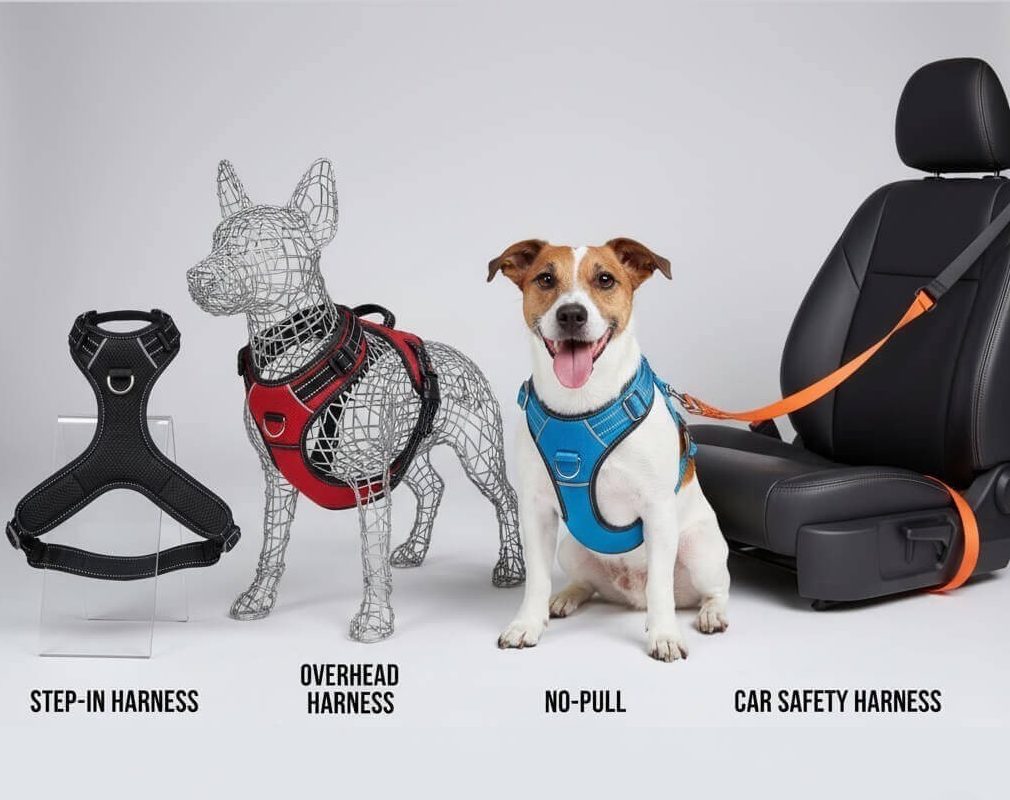
Types of Dog Harnesses — Which Is Right for Your Dog?
Not all harnesses are designed for the same purpose. Once you have the right size, choosing the right type makes a significant difference in how well it works day to day.
Step-In Harness
The dog steps into two loops and you clip it over the back. Easy to put on, good for calm dogs, ideal for small to medium breeds who tolerate being handled. Not great for dogs that wriggle during dressing or for strong pullers.
Overhead (Over-the-Head) Harness
Slips over the head and clips under the belly or chest. More secure than step-in designs, harder to escape from. Good for active, medium to large breeds. Some dogs dislike things going over their head — introduce slowly with treats.
No-Pull Harness
Has a front-clip attachment point on the chest. When the dog pulls, the front clip redirects them back toward you rather than letting them pull straight ahead. Highly effective for strong pullers of all sizes. Not recommended for running or off-lead activities — the front clip can interfere with natural movement.
Padded / Comfort Harness
Lined with soft material across pressure points — chest plate, shoulder straps, belly strap. Ideal for dogs on long daily walks, older dogs, or any dog with sensitive skin. Worth the extra cost if your dog wears it for extended periods.
Car Safety Harness
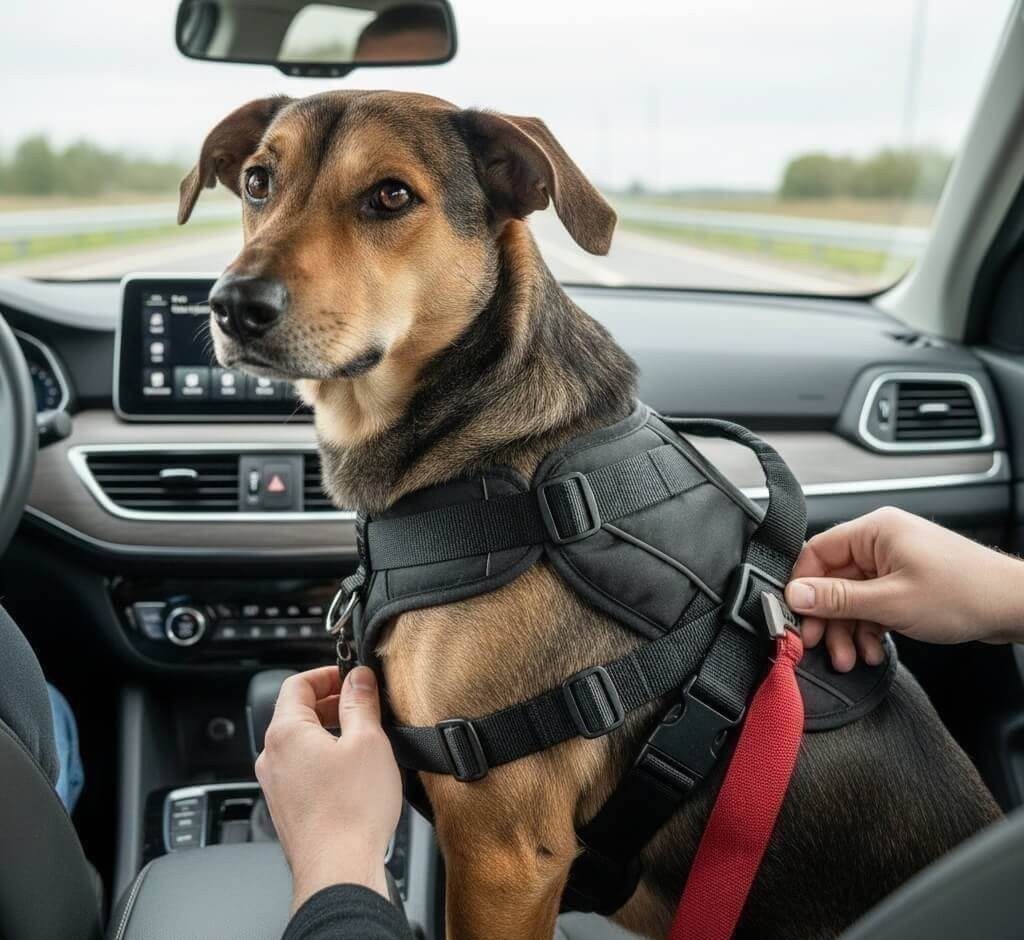
Designed to be clipped into a seat belt receptor. Keeps the dog secure during travel without restricting breathing. Not all car harnesses are crash-tested — look for models that have undergone independent safety testing if road safety is a priority.
How to Check If the Harness Fits Correctly
Getting the right size from the calculator is step one. Checking the fit when the harness arrives is step two — and it’s just as important.
- Put the harness on with all straps at their middle adjustment setting — not pulled tight, not fully loose.
- Run two fingers under every strap — the chest strap, the belly strap, and the neck opening. If two fingers slide comfortably but the strap doesn’t sag, the fit is correct.
- Gently try to slip the harness over your dog’s head — it shouldn’t come off. If it does, tighten the neck area.
- Watch your dog walk a few steps. There should be no rubbing at the armpits, no restriction to the front leg swing, and no visible skin irritation.
- Re-check after the first walk. Harnesses settle slightly with movement — straps may need a small adjustment after the first use.
Frequently Asked Questions (FAQ)
My dog is between two sizes — which should I choose?
Always go up to the larger size. The straps on a larger harness can be tightened to achieve a snug fit; a harness that’s too small has no adjustment that will make it fit correctly. The only exception is if the breed-specific weight range strongly suggests the smaller size — in that case, check the brand’s specific adjustment range before ordering.
How often should I check the harness size?
For puppies, check every 4–6 weeks — they grow fast and a harness that fit perfectly in week eight may be tight by week twelve. For adult dogs, check at least every few months and any time your dog’s weight changes significantly. A 10% change in body weight can affect harness fit noticeably.
Can I use the same harness for walks and car travel?
Some harnesses are dual-rated for walking and car travel, but most are designed for one or the other. A walking harness used as a car restraint may not hold in a collision — the attachment points and construction are different. If car safety matters to you, use a harness that’s been specifically tested for crash resistance.
My dog hates wearing a harness — what should I do?
Start slowly. Let the harness sit near your dog’s bed for a day so they can investigate it at their own pace. Then hold it near them and reward calmly. Progress to draping it over their back without doing it up, then to doing it up briefly with immediate treats. Most dogs habituate to a well-fitted harness within a week of patient introduction — the discomfort they’re reacting to is often novelty, not the harness itself.
Does the harness type affect sizing?
Yes, slightly. Step-in harnesses tend to run slightly smaller than overhead ones of the same labeled size because of how they wrap. No-pull harnesses often have wider chest panels. Always check the manufacturer’s specific measurement guide rather than relying purely on the size label — a Medium from one brand may correspond to a Large from another.
Should I use a harness instead of a collar?
For most daily walks, yes — particularly for dogs that pull, small breeds prone to tracheal issues, and brachycephalic breeds like Bulldogs and Pugs whose anatomy makes neck pressure risky. A collar is still useful for ID tags and for very calm dogs on relaxed, short walks. The two aren’t mutually exclusive — many owners use a harness for walks and a collar for tags.
Explore More Dog Tools
The Harness Size Calculator is part of a complete set of free tools at Dog Pregnancy Calculator — covering everything from pregnancy tracking and breeding calculators to practical everyday tools like the Crate Size Calculator. Browse all calculators by category to find exactly the tool you need.
| Size | Chest Girth | Neck Size | Typical Weight | Breed Examples |
|---|